What Progress Really Looks Like in Neuro Rehab: Why Recovery Isn’t Linear
If you’re recovering from a neurologic condition, dizziness, concussion, stroke, Parkinson’s disease, multiple sclerosis, brain injury, or another issue affecting the nervous system, there’s a good chance you’ve had this thought:
“I was doing better… so why do I suddenly feel worse again?”
You may have had a few good days. Maybe you were walking better, feeling steadier, thinking more clearly, or tolerating more activity.
Then suddenly, symptoms flared.
You felt more fatigued. More dizzy. More off balance. Your arm felt weaker. Your thinking felt slower.
And it’s easy to wonder:
“Am I going backwards?”
The answer is usually no.
Progress in neuro rehab is rarely linear. Recovery is often messy, unpredictable, and influenced by many different variables. Understanding that can make a huge difference, not only in how you approach rehab, but also in how you talk to yourself and stay motivated during the hard days.
Why Progress in Neuro Rehab Isn’t Linear
Unlike healing from a cut or a broken bone, neurologic recovery involves the brain and nervous system relearning how to function.
That process is called neuroplasticity: the nervous system’s ability to adapt, reorganize, and create new pathways.
Neuroplasticity doesn’t happen in a perfectly straight line.
Your symptoms and performance can fluctuate depending on factors like:
Fatigue
Stress
Sleep quality
Illness
Hormonal changes
Pain
Busy environments
Symptom provocation
Mental and emotional load
You may have a day where your nervous system is simply more overloaded than usual. That doesn’t mean you lost progress... instead it may just mean your system has less capacity that day.
Think of it like this:
If your phone battery is only at 20%, it still works… just not as efficiently.
The same can happen with your nervous system.
What Real Progress Actually Looks Like
Many people assume progress should look like dramatic changes every week.
But in neurologic rehab, progress is often more subtle.
Real progress may look like:
Recovering more quickly after symptoms flare
Being able to tolerate more activity before symptoms begin
Feeling less overwhelmed in busy environments
Walking farther or more confidently
Using your arm more naturally
Needing less rest after a difficult day
Feeling less afraid of symptoms when they appear
Having more good days overall, even if bad days still happen
Those changes matter. All of these small changes are BIG reason to stop and celebrate!
They are signs that your brain and body are adapting, even if recovery still feels frustrating at times.
The Principles of Neuroplasticity: How the Brain Learns
While progress is not perfectly predictable, there are specific principles that help encourage neuroplasticity and make recovery more effective.
These principles are the reason why some rehab approaches create meaningful change while others lead to plateaus.
1. Repetition Matters
The nervous system learns through repetition.
One or two attempts usually aren’t enough to create lasting change. The brain needs repeated opportunities to practice a skill in order to strengthen the pathways involved.
This is why small, consistent practice matters more than occasionally doing a large amount all at once.
Examples:
Repeatedly using the affected arm throughout the day
Practicing walking or balance every day
Doing regular head movement exercises for dizziness
The more meaningful reps your brain gets, the more opportunity it has to adapt.
2. Intensity Matters
The nervous system often needs more challenge than people realize.
To drive neuroplasticity, activities typically need to be challenging enough to make the brain pay attention.
That does not mean pushing until you crash or making symptoms unbearable.
Instead, it means finding the “sweet spot”:
Enough challenge to stimulate change
Not so much that the nervous system becomes overwhelmed
For example:
Walking farther than feels completely easy
Doing one more repetition
Practicing slightly more complex balance tasks
Allowing mild symptom provocation that settles again
And the most important - GET THAT HEART RATE UP!
Too little challenge can lead to plateau. Too much can lead to overload.
The right amount is where change happens.
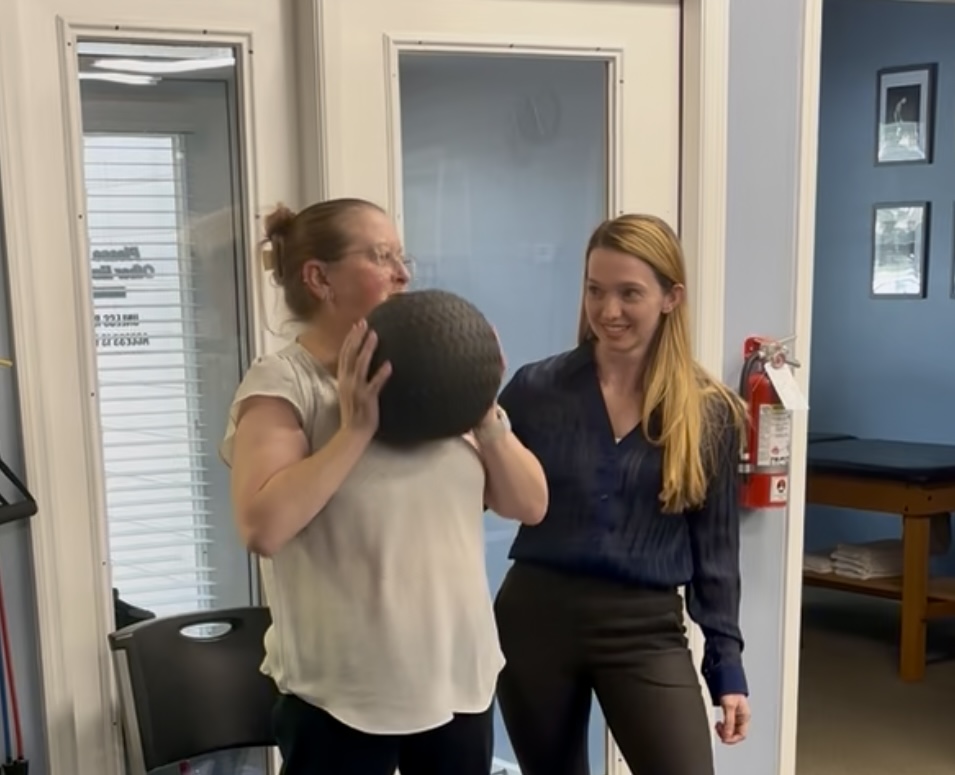
3. Specificity Matters
The brain gets better at what it practices.
If your goal is to walk more confidently, your rehab should include walking.
If your goal is to improve balance while turning your head, you need to practice turning your head while balancing.
If you want to use your arm more in daily life, your arm needs to be involved in meaningful tasks, not just isolated exercises.
Generic rehab often misses this principle.
The most effective neuro rehab is specific to the person, their goals, and the exact activities they want to improve.
4. Salience Matters
The brain learns better when an activity is meaningful.
You are much more likely to create change when you practice things that matter to you personally.
For one person, that may be:
Walking safely in a grocery store
Holding a grandchild
Cooking again
Driving
Going back to work
Returning to the gym
Meaningful tasks activate the brain more powerfully than exercises that feel disconnected from real life.
5. Consistency Matters More Than Perfection
Many people think they need to do every exercise perfectly every day or it “doesn’t count.”
That simply isn’t true.
Your nervous system benefits most from regular, repeated opportunities to practice.
A few minutes of movement every day is often more powerful than one perfect rehab session followed by several days of doing nothing.
This is also why daily activities can count as rehab.
Walking around the house. Using your arm while cooking. Practicing balance while brushing your teeth.
Those moments matter.
Why Skilled Guidance Can Accelerate Recovery
The principles of neuroplasticity are powerful, but applying them correctly can be difficult on your own.
A skilled neuro clinician helps determine:
Which systems are most important to target
How much challenge is appropriate
How to increase repetitions and intensity safely
How to modify things when symptoms flare
How to keep the overall trend moving upward, even when there are hard days
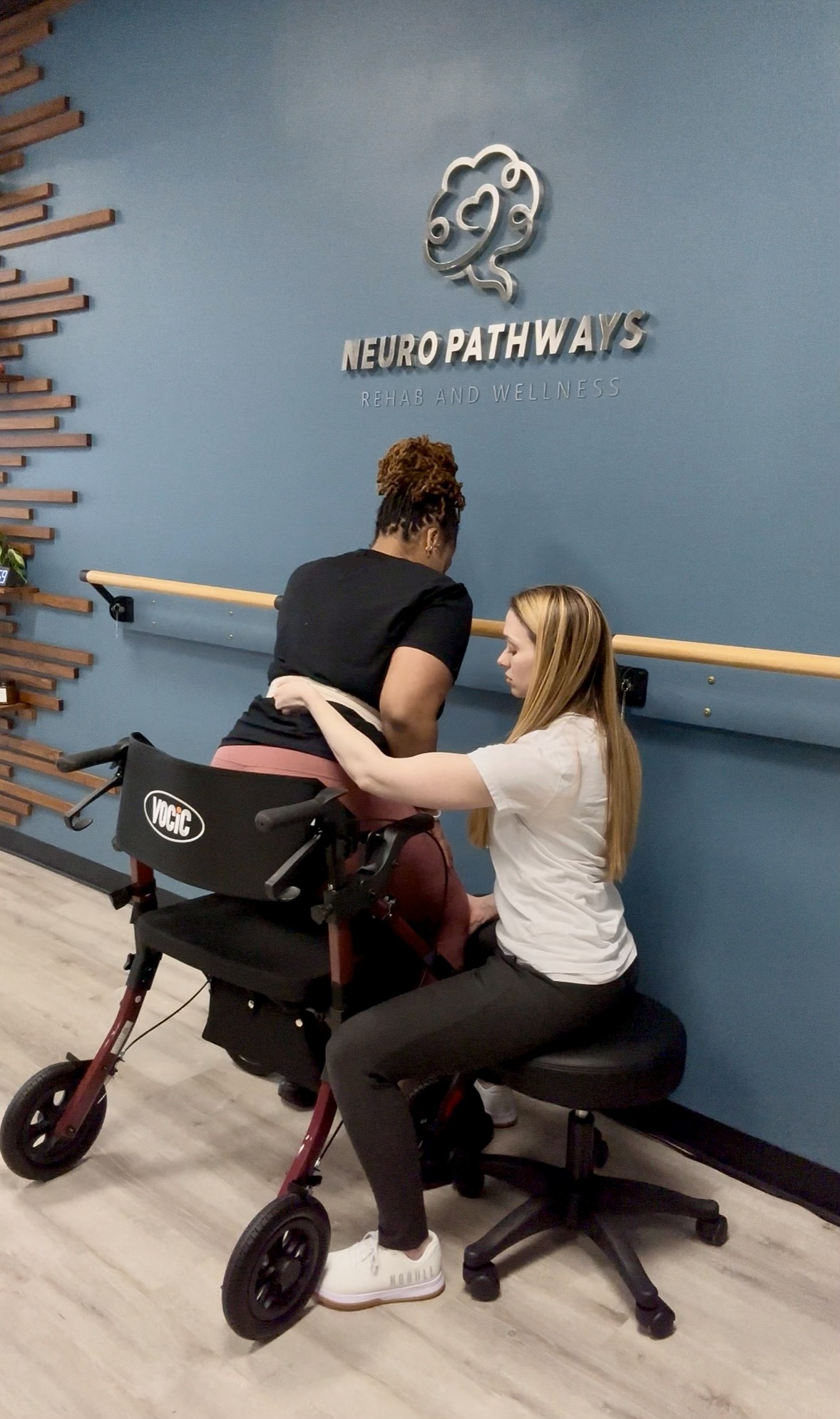
That is one of the biggest benefits of individualized neuro rehab and coaching.
You don’t have to spend months wondering:
“Am I doing the right things?”
You can have a plan that is based on how the nervous system actually learns.
Progress in neuro rehab is not linear.
There will likely be good days, hard days, setbacks, breakthroughs, and periods where it feels like nothing is changing.
But one difficult day does not erase the progress you have made.
Your nervous system is learning.
And with enough repetition, intensity, specificity, meaning, and consistency, change is possible.


